
Edival Rios Receives Voice of Bridgeport Award
- Randy Laist
- Apr 29
- 3 min read

Milagros lives on Clinton Avenue in Bridgeport. Her husband lured her away from her native Puerto Rico with false promises, cheated on her repeatedly, and then died, stranding her in a house full of mostly ungrateful children. She hustles and struggles to make ends meet, until finally she announces to her children that she is going back to Puerto Rico.
"How?" her children ask. "You don’t have any money."
“It was then that she unveiled her wings. They were made from leftover hojas de plátano.”
“Milagros” is a short story written by University of Bridgeport English major Edival Rios. It was featured in the most recent issue of Groundswell, UB’s annual collection of art, poetry, and stories by UB students.
The story may be fiction, but Milagros’s hardships and dreams reflect important truths about the lives of disempowered, marginalized, and overlooked people while also representing their inner dignity and resourcefulness.
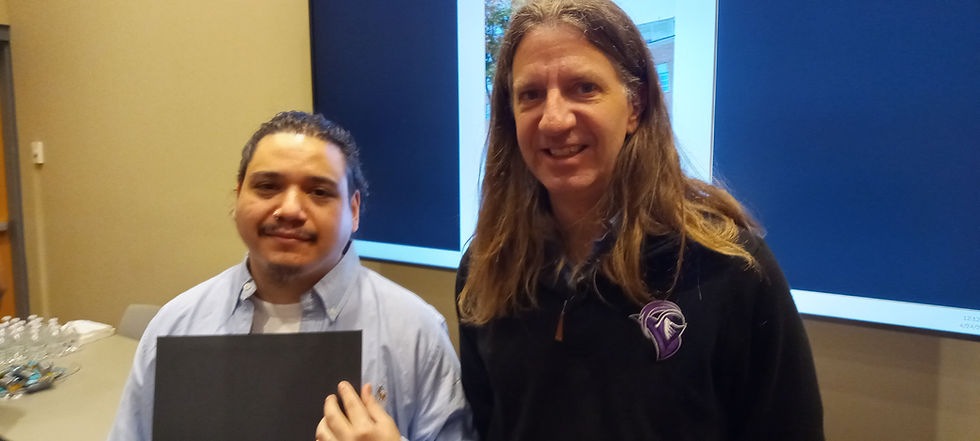
In recognition of the power of this story, Rios was recently presented with the Voice of Bridgeport Award. The Voice of Bridgeport Award is given to a UB student who demonstrates a commitment to telling stories that give voice to the people and communities of Connecticut’s largest city.
Wild Knights caught up with Rios to ask him some questions about his short story.
[Spoiler alert warning: The following interview discusses major events in "Milagros."]
What inspired you to write this story?
My biggest inspiration for this story was the novel The House on Mango Street by Sandra Cisneros. There's a running theme throughout the novel of women being stuck in their circumstances, specifically being taken from home without a way back, which is something I've seen mirrored in my life.
Milagros makes her wings out of plantain leaves. Can you comment on the significance of this detail of the story?
My own grandmother makes a Puerto-Rican dish called pasteles that involves many ingredients but begins and ends with the plantain. You start by making a masa, or sort of dough, out of plantains and you finish by wrapping the product in a plantain leaf. This cycle more or less mirrors the journey of Milagros and the plantain itself is meant to evoke thoughts of Puerto Rico or at least somewhere tropical, a contrast from the setting of Connecticut.
In your story, Milagros doesn’t make it to Puerto Rico. She crashes in Cuba, but she is still smiling. Why did you choose to end the story this way?
I wanted the end of her journey to be consistent with what the character has gone through. She never really gets what she wants, just an approximation of it. She makes it out but never gets there. Even in a life of settling, she still settles at death despite her great effort.
What advice do you have for other writers who are trying to tell their stories?
My advice to writers trying to tell their stories is to just get it out. I've spent too much time thinking my ideas were silly or being afraid of not executing those ideas well. Just get it out and keep working at it. I would also say it's extremely important to experience stories in order to better tell your own. Read books, watch films, go to sporting events, and check out a theater production. Let the tapestry become your identity.
Read Rios’s complete story, along with many other powerful contributions from UB students, in Groundswell 2026.



Comments